
 EN
EN
 DA
DA
 NL
NL
 FI
FI
 FR
FR
 DE
DE
 AR
AR
 BG
BG
 CS
CS
 EL
EL
 HI
HI
 IT
IT
 JA
JA
 KO
KO
 NO
NO
 PT
PT
 RO
RO
 RU
RU
 ES
ES
 SV
SV
 TL
TL
 ID
ID
 LT
LT
 SK
SK
 UK
UK
 VI
VI
 SQ
SQ
 HU
HU
 TH
TH
 TR
TR
 AF
AF
 MS
MS
 BN
BN
 KN
KN
 LO
LO
 LA
LA
 PA
PA
 MY
MY
 KK
KK
 UZ
UZ
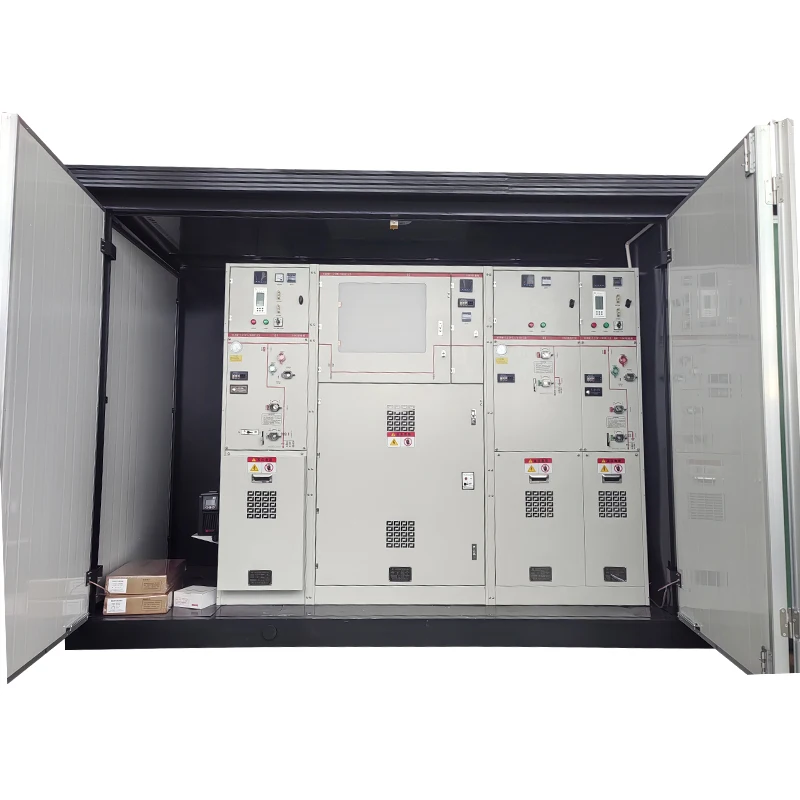
Understanding High-voltage Complete Sets and Their Role in Grid Expansion
What Are High-voltage Complete Sets? Core Components and Functions
HVCS systems handle high voltage power transmission above 110 kV across electrical grids. They generally consist of several key components including GIS equipment, circuit breakers, transformers, plus various protective relays all arranged according to what the particular power network needs. Today's high voltage systems focus heavily on dependable operation thanks to better insulation materials and improved heat control mechanisms. Most installations last well beyond three decades before needing major overhauls. According to recent market research from 2024, around four out of five utility companies are asking for these systems to come equipped with live diagnostics features. This helps prevent unexpected power cuts when expanding existing grid infrastructure, which has become increasingly important as demand continues growing.
Integration in Ultra-high-voltage (UHV) AC and DC Transmission Systems
Systems that operate at ultra high voltages above 800 kV are changing how electricity travels across vast distances. Most regions rely on UHV AC systems for connecting grids because they cost less to build initially. But when it comes to transmitting power between countries over really long distances, say more than 1,000 kilometers, HVDC tech actually loses about 40 percent less energy along the way. This difference matters a lot for big scale operations. Looking ahead, the market for components used in these high voltage systems is expected to expand pretty quickly too. Industry forecasts suggest around 8.9% annual growth until 2030 as countries push harder to integrate renewable sources into their power networks.
Key Applications in Modern Power Grid Infrastructure
- Renewable energy corridors linking offshore wind farms to urban centers
- Underground transmission networks in metro areas with space constraints
- Cross-border interconnectors facilitating international power sharing
Market Trends: Growth of the Global HV Switchgear Market Driven by Grid Expansion
The HV switchgear segment accounts for 62% of total HVCS procurement budgets, with GIS installations growing 15% annually since 2020. This surge aligns with global grid investments exceeding $300 billion annually to support renewable integration and replace aging infrastructure.
Standardization vs. Customization: Balancing Flexibility and Efficiency in Deployment
Utilities increasingly adopt modular HVCS designs that allow 70% standardized components while permitting regional customization. This hybrid approach reduces deployment timelines by 6–8 months compared to fully bespoke solutions, critical for meeting renewable project interconnection deadlines.
Challenges in High-voltage Transmission Buildout and Capacity Limitations
Aging Infrastructure and Reliability Risks in the U.S. Transmission Network
More than seventy percent of transmission lines across the United States are now over a quarter century old, and many essential parts such as transformers and circuit breakers are reaching their operational limits. According to the American Society of Civil Engineers report from 2021, our country's energy grid received just a D+ grade, which shows how fragile it really is against severe weather events and potential widespread power failures. These kinds of reliability issues create real problems for High-voltage Complete Sets equipment manufacturers because older infrastructure makes it tough to incorporate newer technologies that could improve grid performance. The problem gets even worse when we look at numbers: limited transmission capacity resulted in nearly ten billion dollars worth of lost renewable energy production last year alone. That kind of financial loss clearly shows why investing in smart infrastructure upgrades has become so important for everyone involved in the energy sector.
Interconnection Delays and Their Impact on Renewable Energy Integration
The average time to connect to the power grid has gone past four years across many parts of the United States, causing serious delays for new wind farms and solar installations. According to an industry report from last year, nearly two thirds of all stalled renewable energy projects point to limited transmission capacity as their main problem. What happens next? Developers often have no choice but to tweak their original plans to fit what's already there instead of building the best possible high voltage systems they originally envisioned. This creates extra costs and compromises efficiency that could have been avoided if the grid was ready when these clean energy projects were first proposed.
Case Study: ERCOT’s Grid-enhancing Technologies to Alleviate Transmission Congestion in Texas
ERCOT reduced west Texas solar curtailment by 19% in 2023 through dynamic line rating systems and advanced power flow controls. The operator achieved 800 MW of additional throughput on existing corridors – equivalent to building 200 miles of new transmission lines. These upgrades demonstrate how adaptive technologies can temporarily mitigate hard infrastructure limitations.
Rising Interconnection Queue Backlogs Across North America
The continent’s interconnection queue reached 1.4 TW in Q1 2024 – triple 2020 levels. Lawrence Berkeley National Laboratory data shows only 21% of proposed projects reach commercial operation, with 78% of cancellations tied to transmission upgrade cost allocations. This backlog pressures utilities to prioritize incremental expansions over holistic high-voltage network planning.
Ultra-high Voltage Technology and the Transformation of Energy Systems
How UHV Transmission Enables National Energy Structure Optimization
Transmission systems working at ultra high voltages (UHV) above 800 kV are changing the game when it comes to matching energy needs with available supply across large areas. These systems let countries move massive amounts of electricity over distances exceeding 1,500 kilometers while losing less than 6 percent along the way according to Ponemon Institute research from last year. What makes this possible? Well, think about it - one UHV line can carry around 12 gigawatts worth of power, which would be like having twelve nuclear power stations feeding directly into cities. And here's another benefit: such lines take up about 30% less space on the ground compared to traditional 500 kV transmission corridors. This kind of capacity matters a lot as many countries try to replace old coal and gas plants with cleaner sources spread out across different regions. Looking ahead, experts predict the market for high voltage equipment will expand at roughly 7.2% per year until 2030 mainly because governments keep investing in these advanced grids. The better connection between renewable energy sites and population centers means fewer instances where wind farms or solar arrays have to shut down simply because there's nowhere to send the electricity they generate.
HVDC vs. HVAC: Comparing Efficiency for Long-distance Grid Expansion
Modern grid expansions increasingly favor high-voltage direct current (HVDC) over alternating current (HVAC) for corridors exceeding 600 km. HVDC systems demonstrate:
- 40% lower line losses over 800 km distances
- 25% reduced right-of-way requirements
- 200% higher power transfer capacity per conductor
While HVAC remains cost-effective for shorter interconnections, HVDC’s efficiency advantages become pronounced in continent-scale projects. The China Southern Grid HVDC project achieved 95.4% transmission efficiency across 1,642 km, delivering 5 GW from hydropower plants to coastal megacities.
Case Study: China’s UHV AC and DC Projects as a Blueprint for Large-scale Deployment
China’s $350 billion UHV investment since 2016 demonstrates the scalability of high-voltage complete sets in national electrification strategies. The ±1,100 kV Changji-Guquan HVDC line – the world’s highest-voltage project – transmits 12 GW from Xinjiang’s deserts to Anhui province 3,300 km away, powering 50 million homes. This deployment blueprint shows:
| Metric | Conventional Grid | UHV Network |
|---|---|---|
| Renewable Integration | 4.1 GW (2015) | 28.3 GW (2023) |
| Transmission Capacity | 0.8 GW/km | 2.4 GW/km |
| Construction Time | 72 months | 36 months |
These projects highlight how standardized high-voltage complete sets accelerate deployment while maintaining flexibility for regional grid codes, providing a replicable model for other G20 nations.
Renewable Energy and Emerging Load Drivers Shaping Transmission Demand
Supporting Renewable Energy Goals with High-voltage Transmission Expansion
The modern power grid needs expanded high voltage transmission systems if we want to bring renewable energy online at any meaningful scale. Most new solar panels and wind turbines end up in remote locations where there's space but no existing infrastructure, so we need those long distance power lines running from countryside to city neighborhoods. This has created a big market for specialized equipment at substations like circuit breakers and disconnect switches that can handle the variable output from wind and sun. The numbers back this up too Market Data Forecast shows that North American companies selling high voltage gear saw their business grow around 8.4% each year starting in 2022, all because of this green energy push. Power companies are getting smart about it now, going for modular designs that let them install stuff faster. These changes have cut down on wait times when connecting new solar or wind farms to the grid by anywhere between a quarter and almost half.
Grid-enhancing Technologies: Dynamic Line Rating and Beyond
Dynamic Line Rating or DLR systems basically make better use of power lines that already exist by changing how much electricity they can handle depending on current weather and what's actually being used at any given moment. These systems work really well when combined with those fancy high voltage monitoring devices, allowing utilities to get around 30% more out of their existing infrastructure without having to build anything new, which saves money and time. The industry is also seeing some interesting developments lately with things like special conductors that can handle more heat and these fault current limiters that help protect the grid during surges. All these improvements matter a lot because as we bring more wind and solar power online, the grid needs to be able to adapt quickly to changes in supply and demand throughout the day.
Strategic Procurement of High-voltage Complete Sets Aligned with Renewable Project Timelines
Utilities now synchronize procurement of high-voltage complete sets with renewable developers’ construction phases. This coordination reduces equipment lead times from 18+ months to <12 months by using standardized substation blueprints. Pre-engineered kits with GIS components have proven 22% faster to commission in wind farm tie-ins compared to custom designs.
Data Centers as Major New Load Drivers: Impacts on Transmission Planning
According to research published in Frontiers in Energy Research for 2025, data centers are currently using up around 7.2 percent of all peak electricity demand across the United States. That's actually comparable to what many mid sized cities consume on their busiest days. These facilities typically draw massive amounts of power, often exceeding 100 megawatts at once, which means they need special transmission lines built just for them. More than half (about 58%) of newly constructed large scale data centers are asking for direct connections at the high voltage level of 500 kilovolts. The growing number of these power hungry operations is putting real pressure on energy planners who must speed up approvals for new transmission infrastructure projects. Industry insiders report that nearly three quarters (72%) of Independent System Operators have had to completely rethink their load predictions because of how quickly artificial intelligence applications and data storage requirements continue expanding.
Integrating High-voltage Complete Sets into Data Center Power Supply Corridors
New data center clusters require 345kV+ substations within 5 miles, demanding compact high-voltage complete sets with dual redundant feeds. Modular switchgear configurations now dominate these installations, achieving 99.999% availability through parallel busbar systems. Recent projects demonstrate 40% faster energization timelines when using pre-tested HV equipment packages versus traditional piecemeal assembly.
Government Support and Funding for High-voltage Transmission Infrastructure
Key Legislation: IIJA, IRA, and BIL Driving Investment in Grid Modernization
Federal lawmakers have recently set aside more than $80 billion dollars to upgrade America's electrical grid system, and high voltage equipment is going to be essential for making this happen. The Infrastructure Investment and Jobs Act alone puts aside around $65 billion for various grid improvements, with about $2.5 billion going directly toward those big regional transmission projects that need high voltage tech. There are also other pieces of legislation helping out too. The Inflation Reduction Act offers tax breaks to companies that install new transmission gear, while the Bipartisan Infrastructure Law focuses on getting smart grids working well with ultra high voltage systems. All these different laws together are responding to something pretty significant - there's been roughly a 60 percent jump in proposed transmission projects since 2020. Old infrastructure just can't keep up anymore with all the renewable energy coming online plus the massive growth we're seeing in data centers across the country.
How Federal Initiatives Are Accelerating Transmission Upgrades and Deployment
The Grid Deployment Office at the Department of Energy has started speeding up permits for projects that use standard high voltage equipment packages. This cuts down on approval times by around 30 to 40 percent compared to when companies submit custom designs. Through federal loan programs like the Transmission Facilitation initiative, private investors have poured $3.2 billion into building HVDC transmission lines since early 2022. These efforts are helping get those high voltage connectors and switchgear installed at wind farms and solar plants across the country. About four out of five funded projects actually include components that work at voltages above 500 kilovolts. When utility companies line up their buying schedules with the goals set in recent infrastructure legislation, they qualify for government grants that cover anywhere from 15% to half the cost of these expensive high voltage components.
FAQ
What are high-voltage complete sets (HVCS)?
High-voltage complete sets (HVCS) are systems designed for power transmission that exceed 110 kV. They include key components such as GIS equipment, circuit breakers, transformers, and protective relays tailored to the specific needs of a power network.
What is the significance of ultra-high voltage (UHV) transmission?
UHV transmission allows for the transportation of huge amounts of electricity across long distances with minimal losses. It helps countries match energy needs with supply, making it ideal for moving power from renewable sources to population centers.
What challenges does the transmission network face in the U.S.?
The U.S. transmission network is plagued by aging infrastructure and reliability risks, leading to issues like limited capacity and interconnection delays that impact renewable energy integration.
How do dynamic line rating (DLR) systems benefit the grid?
DLR systems maximize existing power line usage by adapting electricity load based on current conditions, enhancing efficiency without needing new infrastructure.
What is the role of government in supporting high-voltage transmission infrastructure?
Government initiatives, such as the Infrastructure Investment and Jobs Act, provide significant funding and support for modernizing the grid and reducing approval times for using high voltage equipment packages.
Table of Contents
-
Understanding High-voltage Complete Sets and Their Role in Grid Expansion
- What Are High-voltage Complete Sets? Core Components and Functions
- Integration in Ultra-high-voltage (UHV) AC and DC Transmission Systems
- Key Applications in Modern Power Grid Infrastructure
- Market Trends: Growth of the Global HV Switchgear Market Driven by Grid Expansion
- Standardization vs. Customization: Balancing Flexibility and Efficiency in Deployment
-
Challenges in High-voltage Transmission Buildout and Capacity Limitations
- Aging Infrastructure and Reliability Risks in the U.S. Transmission Network
- Interconnection Delays and Their Impact on Renewable Energy Integration
- Case Study: ERCOT’s Grid-enhancing Technologies to Alleviate Transmission Congestion in Texas
- Rising Interconnection Queue Backlogs Across North America
- Ultra-high Voltage Technology and the Transformation of Energy Systems
- How UHV Transmission Enables National Energy Structure Optimization
- HVDC vs. HVAC: Comparing Efficiency for Long-distance Grid Expansion
- Case Study: China’s UHV AC and DC Projects as a Blueprint for Large-scale Deployment
-
Renewable Energy and Emerging Load Drivers Shaping Transmission Demand
- Supporting Renewable Energy Goals with High-voltage Transmission Expansion
- Grid-enhancing Technologies: Dynamic Line Rating and Beyond
- Strategic Procurement of High-voltage Complete Sets Aligned with Renewable Project Timelines
- Data Centers as Major New Load Drivers: Impacts on Transmission Planning
- Integrating High-voltage Complete Sets into Data Center Power Supply Corridors
- Government Support and Funding for High-voltage Transmission Infrastructure
-
FAQ
- What are high-voltage complete sets (HVCS)?
- What is the significance of ultra-high voltage (UHV) transmission?
- What challenges does the transmission network face in the U.S.?
- How do dynamic line rating (DLR) systems benefit the grid?
- What is the role of government in supporting high-voltage transmission infrastructure?