
 EN
EN
 DA
DA
 NL
NL
 FI
FI
 FR
FR
 DE
DE
 AR
AR
 BG
BG
 CS
CS
 EL
EL
 HI
HI
 IT
IT
 JA
JA
 KO
KO
 NO
NO
 PT
PT
 RO
RO
 RU
RU
 ES
ES
 SV
SV
 TL
TL
 ID
ID
 LT
LT
 SK
SK
 UK
UK
 VI
VI
 SQ
SQ
 HU
HU
 TH
TH
 TR
TR
 AF
AF
 MS
MS
 BN
BN
 KN
KN
 LO
LO
 LA
LA
 PA
PA
 MY
MY
 KK
KK
 UZ
UZ
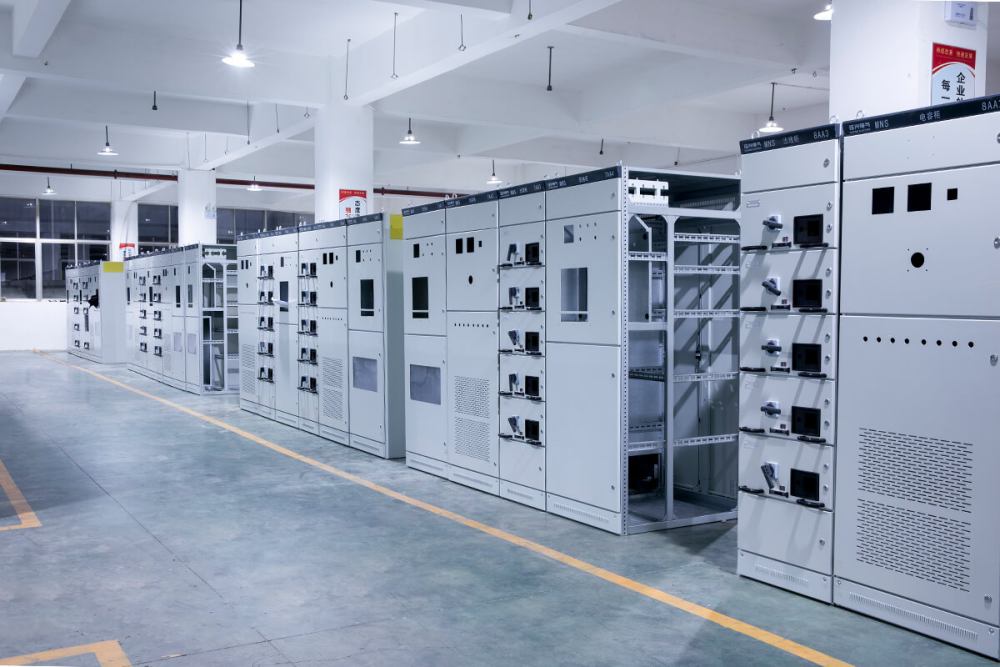
Pre-Installation Planning and Site Assessment for High Voltage Switch Cabinets
Evaluating site conditions and load requirements for high voltage switchgear
Getting installation right starts by looking at what's going on around the equipment. Things like extreme temperatures, vibrations from nearby machinery, and even earthquake risks can really mess with how well those switch cabinets work over time. Good engineers don't just guess about what the future holds for power needs. They dig into past usage numbers and watch how different industries grow year after year. Why? Because if they get this wrong, the whole system becomes obsolete way too soon. A recent look at industrial sites in 2024 found something pretty shocking actually. Nearly two thirds of all electrical problems traced back to poor initial assessments of load requirements. That makes sense when we think about it though. Accurate predictions save money and headaches down the road.
Designing layout for accessibility, safety, and future maintenance
Strategic placement ensures long-term operational efficiency and personnel safety. Key considerations include:
- Minimum 36" front and rear clearance for arc flash protection (OSHA 1910.303)
- Dedicated service aisles compliant with NEC 110.26 workspace standards
- Modular configurations enabling panel replacement without full system shutdown
Recent NFPA 70E updates require an additional 20% space allocation in advanced facilities to accommodate robotic maintenance systems.
Ensuring compliance with electrical standards (e.g., NEC) during planning
All designs must adhere to recognized electrical standards to ensure safety and regulatory alignment:
| Standard | Key Requirement |
|---|---|
| NEC 490.24 | Nonconductive barriers between adjacent cabinets |
| IEEE C37.20.1 | Busbars rated for 200% withstand current |
| NEMA SG-5 | Corrosion-resistant coatings in humid environments |
These benchmarks form the foundation of reliable, code-compliant installations.
Verifying system compatibility and coordination with main power infrastructure
Cross-functional teams must validate integration points with existing infrastructure:
- CT/VT ratios aligned with protective relay settings
- Breaker interrupting capacity exceeding available fault current
- Busbar phasing matched to utility supply configuration
Proper coordination reduces arc flash incident energy by 40–60% in industrial systems, according to recent infrastructure evaluations.
Site Preparation and Environmental Safeguards for Switchgear Installation
Allocating Adequate Space and Constructing Stable Foundations for HV Cabinets
When installing high voltage switch cabinets, proper space planning is absolutely essential. Most installers need around 36 to 48 inches of room in front of these units, though the exact clearance depends on what voltage level we're dealing with and how big the cabinet actually is. The foundation work requires some serious attention too. We typically recommend reinforced concrete bases that can handle at least 2500 psi compression strength. And don't forget about those baseplates. They really need good quality grouting and leveling within about 1/8 inch up or down. This helps prevent problems from earthquakes or ground shifts over time. Industry standards like ANSI/IEEE 693 back this approach, but honestly, even without the regulations, nobody wants their equipment rattling around during an unexpected tremor.
Maintaining Required Clearance and Safe Approach Distances Per OSHA/NEC
Clearance requirements are critical for safe operation and emergency access:
| Clearance Type | OSHA Minimum | NEC Minimum |
|---|---|---|
| Front working space | 48" | 36"-48"* |
| Side/rear access | 30" | 30" |
| Overhead vertical space | 84" | 78" |
| *NEC 110.26(A)(1) varies by voltage level |
These dimensions support NFPA 70E Article 130.5 hazard boundary compliance and facilitate safe approach during live work.
Protecting Installation Area From Moisture, Dust, and External Hazards
Protecting equipment begins with choosing the right enclosures. Indoors usually needs NEMA 12 rating while outdoors or in areas where cleaning happens regularly requires NEMA 4X protection. When it comes to climate controlled switch rooms, keeping humidity between about 10 to 30 percent and maintaining temperatures within plus or minus 5 degrees Fahrenheit is generally what industry standards recommend. Critical systems benefit from positive pressure air handling units equipped with MERV 13 filters. These systems keep out particles as small as one micron which helps prevent all sorts of contamination problems over time.
Critical Safety Protocols During High Voltage Switch Cabinets Installation
Implementing electrical hazard controls and de-energized work procedures
When working with high voltage systems, safety starts with making sure everything is truly off before touching anything. This means following proper lockout-tagout (LOTO) procedures as required by industry standards. Research indicates that when these protocols are followed correctly, they cut down on dangerous arc flash events by around 72%. That makes a huge difference for electricians and maintenance staff who need to get their hands on live equipment. Before starting any kind of modification work, techs should always check the phase sequence first and make sure all capacitors have been fully discharged. Using certified voltage detectors helps confirm there's absolutely no residual power present in the system being worked on.
Mandating proper PPE and ensuring team qualification for HV environments
Personnel working on systems above 1 kV must wear Category 4 arc-rated clothing (40+ cal/cm²) and use 1,000V-rated insulated gloves. ESFI data reveals that 63% of severe electrical injuries occur when PPE is bypassed. All team members must hold valid HV Switching Operator certifications—no exceptions, even under schedule pressure.
Conducting safety training and enforcing supervision protocols on-site
Daily pre-task briefings should cover:
- Specific hazards related to busbar arrangements and grounding points
- Emergency response plans for electrical incidents
- Enforcement of the "buddy system" during live adjustments
A designated safety observer must verify compliance with minimum 42" approach distances (per OSHA 1910.333) before any energization occurs.
Balancing project timelines with rigorous safety verification processes
Despite time constraints, a three-stage verification process safeguards quality:
- Infrared scans to confirm no unintended loads prior to energization
- Torque validation of all busbar connections within ±5% of manufacturer specifications
- Ground continuity tests showing less than 1Ω resistance across bonded surfaces
This layered approach reduces post-installation faults by 89% compared to single-check methods, based on IEEE 2023 Power Systems Analysis.
Proper Grounding, Bonding, and Electrical Connections for System Reliability
Installing Effective Grounding and Bonding Systems to Prevent Faults
Getting proper fault current dissipation requires a good low impedance grounding system. When installing these systems, copper grounding rods work best along with those corrosion resistant bonding jumpers we all know about. The conductor sizes matter too since they need to handle surges without going over 1 kV during those pesky short circuit events as specified in NEC Article 250. Some real world testing has actually demonstrated something interesting about grounding configurations. Systems using two grounding electrodes instead of just one rod seem to cut down on those dangerous ground potential rises by around two thirds according to field measurements taken across various installations.
Ensuring Insulation Integrity and Long-Term Reliability of HV Connections
High-voltage terminations require insulation rated for at least 125% of operating voltage, with periodic dielectric testing to detect early degradation. Silicone-based insulators offer 40% better thermal stability than traditional rubber compounds in 480V+ environments. Replacing bushing insulation every 10–15 years prevents 82% of phase-to-ground faults in aging switchgear.
Precision in Mechanical Alignment and Torque Specifications for Terminations
Terminations must be made with calibrated torque wrenches set to ±5% of specified values. Misaligned lugs contribute to 23% of connection failures in 15 kV systems, often revealed as thermal hotspots during infrared inspections. The following table outlines key termination parameters:
| Conductor Size | Minimum Torque (lb-ft) | Maximum Temperature Rise |
|---|---|---|
| 500 kcmil | 45 | 55°C (130°F) |
| 750 kcmil | 65 | 60°C (140°F) |
| 1000 kcmil | 85 | 65°C (149°F) |
Key Insight: 30% of Switchgear Failures Linked to Improper Terminations (IEEE)
Looking at data from IEEE studies spanning thirty years shows something interesting most electrical problems actually start at connection points rather than inside the main components themselves. We're talking about things like bolts that are cross threaded, lugs that aren't tightened properly enough, and those aluminum terminals that just love to oxidize. These issues cost around two point one million dollars every year in unnecessary downtime for medium voltage systems. Makes sense why so many companies now insist on having NETA certified techs check all connections thoroughly before turning on any new installation. After all, spending time upfront verifying torque specs can save loads of money down the road when things go wrong unexpectedly.
Post-Installation Testing, Commissioning, and Ongoing Compliance
Performing visual, mechanical, and electrical tests after installation
Post-installation validation includes:
- Visual inspection for alignment and physical damage
- Mechanical checks of door operation, interlocks, and structural integrity
- Electrical testing per NETA 2023 standards: insulation resistance (minimum 1,000 megohms) and dielectric withstand at 125% of rated voltage
Thermal imaging during initial loading detects 87% of connection flaws missed visually.
Commissioning with phased energization and automated diagnostic tools
Phased energization allows incremental power application while monitoring voltage stability and harmonic distortion via IoT sensors. Automated relay testing simulates faults with 2.8-millisecond precision, ensuring rapid arc flash containment. Modern commissioning also uses infrared spectroscopy to detect SF6 gas leaks at 0.25% concentration—40% more sensitive than conventional methods.
Establishing long-term maintenance schedules and regulatory compliance
How often equipment needs maintenance really comes down to where it's installed. Dusty industrial sites typically need infrared checks every three months while clean rooms can get away with once a year inspections. The latest NFPA 70B guidelines say oil filled breakers should have their gas levels compared against baseline readings roughly every three years. This test catches most developing problems before they become serious issues, though actual detection rates vary depending on equipment condition. Most facilities use digital compliance tools to monitor key limits set by various standards bodies. For high voltage systems running continuously, keeping ambient temps below 40 degrees Celsius as per IEC 62271-200 remains essential. Operators who ignore this simple threshold risk premature component failure during peak load periods.
Updating documentation and re-certifying personnel for continued safety
As-built drawings must be updated quarterly to reflect component changes and relay settings, reducing emergency troubleshooting time by 65%. Annual NFPA 70E recertification ensures technicians maintain proficiency with arc-rated PPE and understand evolving approach boundaries—especially important given that 32% of electrical injuries occur during maintenance of supposedly "de-energized" equipment.
FAQ: High Voltage Switch Cabinets Installation
Why is pre-installation planning crucial for high voltage switch cabinets?
Pre-installation planning is critical to ensure that surrounding environmental conditions, such as extreme temperatures and vibrations, do not affect the performance of switch cabinets. It also involves accurate assessments of load requirements to prevent early obsolescence and electrical failures.
What are the key safety protocols during installation?
Key safety protocols include implementing electrical hazard controls like lockout-tagout (LOTO) procedures, mandating proper PPE, ensuring team qualification for HV environments, conducting safety training, and balancing project timelines with rigorous safety verification processes to minimize incidents.
How do you verify system compatibility with the existing power infrastructure?
System compatibility is verified by aligning CT/VT ratios with protective relay settings, ensuring breaker interrupting capacity exceeds available fault current, and matching busbar phasing with the utility supply configuration to reduce arc flash incident energy.
What factors should be considered in site preparation?
Site preparation involves allocating adequate space for equipment, constructing stable foundations, maintaining required clearance and safe approach distances per OSHA/NEC, and protecting the installation area from moisture, dust, and external hazards.
Why is ongoing compliance important after installation?
Ongoing compliance ensures the system operates safely and efficiently. It includes regular maintenance, updating documentation, re-certifying personnel, and adherence to regulatory guidelines to maintain system reliability and safety.
Table of Contents
- Pre-Installation Planning and Site Assessment for High Voltage Switch Cabinets
- Site Preparation and Environmental Safeguards for Switchgear Installation
- Critical Safety Protocols During High Voltage Switch Cabinets Installation
- Proper Grounding, Bonding, and Electrical Connections for System Reliability
- Post-Installation Testing, Commissioning, and Ongoing Compliance
-
FAQ: High Voltage Switch Cabinets Installation
- Why is pre-installation planning crucial for high voltage switch cabinets?
- What are the key safety protocols during installation?
- How do you verify system compatibility with the existing power infrastructure?
- What factors should be considered in site preparation?
- Why is ongoing compliance important after installation?