
 EN
EN
 DA
DA
 NL
NL
 FI
FI
 FR
FR
 DE
DE
 AR
AR
 BG
BG
 CS
CS
 EL
EL
 HI
HI
 IT
IT
 JA
JA
 KO
KO
 NO
NO
 PT
PT
 RO
RO
 RU
RU
 ES
ES
 SV
SV
 TL
TL
 ID
ID
 LT
LT
 SK
SK
 UK
UK
 VI
VI
 SQ
SQ
 HU
HU
 TH
TH
 TR
TR
 AF
AF
 MS
MS
 BN
BN
 KN
KN
 LO
LO
 LA
LA
 PA
PA
 MY
MY
 KK
KK
 UZ
UZ
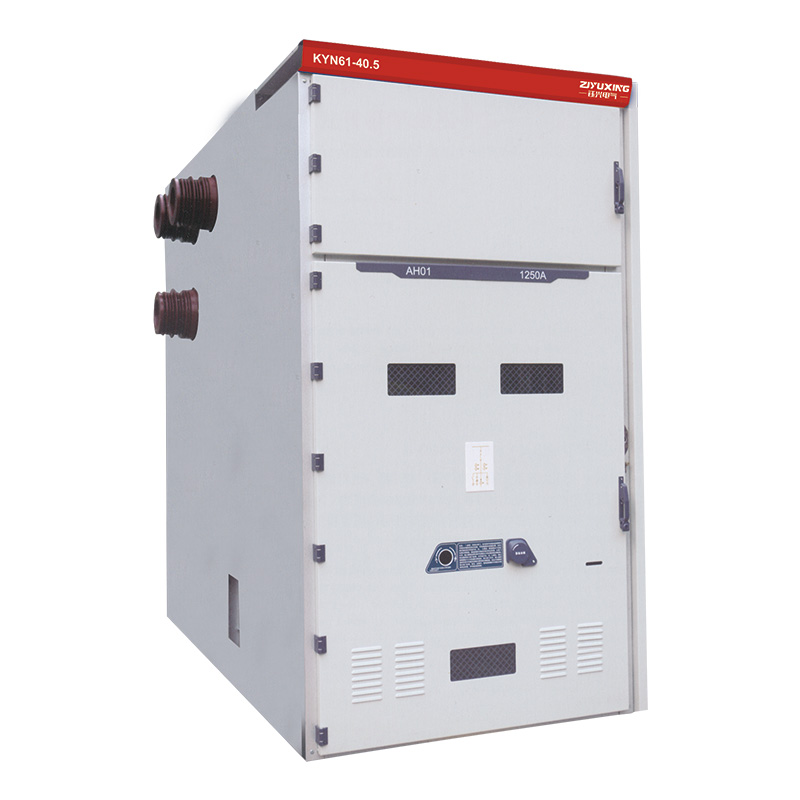
Superior Insulation and Arc-Quenching Performance of SF6 Gas
Why SF6 Is the Preferred Insulation Medium in Inflatable Cabinets
The reason sulfur hexafluoride or SF6 gas has become so popular in today's inflatable cabinet designs comes down to those amazing insulation qualities and how well it suppresses electrical arcs. When compared to older air insulated systems, SF6 actually provides around three times better dielectric strength under the same pressure conditions. What this means is engineers can design much smaller cabinets without compromising on safety standards. Another big plus point is that SF6 doesn't react chemically, so it stops oxidation from happening to all those internal parts inside the cabinets. For city power companies dealing with tight spaces in urban substation areas, this means fewer maintenance headaches over time since there's less corrosion damage to worry about.
Dielectric Strength and Arc-Quenching Capability of SF6 Gas
The gas’s electronegative molecular structure rapidly absorbs free electrons during faults, suppressing arcs 50% faster than nitrogen-based alternatives (Ponemon 2023). This performance allows inflatable cabinets to withstand voltages exceeding 800 kV with a dielectric breakdown threshold of 89 kV/cm at 0.3 MPa.
| Property | SF6 Gas | Air |
|---|---|---|
| Dielectric Strength | 89 kV/cm | 30 kV/cm |
| Arc-Quenching Speed | 3 μs | 6 μs |
| Operating Pressure | 0.3–0.6 MPa | 0.1 MPa |
Performance Comparison with Air-Insulated Switchgear
SF6-based systems reduce footprint by 60% compared to air-insulated equivalents while handling 2.5x higher current loads. A 2024 Grid Stability Report showed SF6 cabinets had 98% fewer arc-related failures in coastal environments, attributed to its moisture-resistant insulation.
Optimizing SF6 Gas Pressure for Reliable Insulation
Maintaining 0.45±0.05 MPa pressure balances insulation efficiency and mechanical stress on sealed enclosures. Below 0.2 MPa, dielectric performance drops exponentially, while over-pressurization beyond 0.7 MPa risks weld fatigue in stainless steel housings.
Global Trends in SF6 Adoption for Compact Switchgear Systems
Despite environmental concerns, SF6 use grew 18% YoY (2023) in urban substations, driven by space-efficient infrastructure demands. Asia-Pacific leads adoption with 43% market share, deploying 15,000+ SF6 cabinets annually for metro rail and data center power distribution.
Fully Sealed Design for Maintenance-Free and Long-Term Reliability
Eliminating Contamination Risks in Inflatable Cabinet Operation
SF6 gas insulated cabinets are built with completely sealed construction which keeps dust, moisture and all sorts of chemical stuff away from the inside parts. This really matters in places like factories or near coasts where there's lots of dirt floating around in the air that can make regular switchgear rust faster. When the gas stays clean inside these cabinets, it stops insulation problems that lead to power failures. According to some industry data from last year, about 23 percent of unexpected power cuts happen because non sealed systems get contaminated over time.
Hermetic Sealing Technology Ensuring Long-Term Integrity
The combination of multi layer gaskets along with laser welded stainless steel enclosures forms really effective pressure tight barriers that keep SF6 gas contained for many years. Tests conducted independently have demonstrated that these seals actually restrict gas leakage to less than 0.1 percent each year which is ten times better than what most industry standards require. Even when subjected to extreme temperature changes ranging from minus 40 degrees Celsius all the way up to 85 degrees Celsius, they still perform exceptionally well. Now there are advanced polymer gaskets equipped with built in sensors that allow continuous monitoring of seal integrity without needing any kind of regular maintenance checks. This means operators can spot potential issues before they become serious problems.
Case Study: 30-Year Service Life Without Maintenance in Coastal Substations
An inflatable cabinet array installed back in 1993 at Singapore's Marina Bay coastal substation has been running smoothly despite years of monsoon season exposure and constant 95% humidity levels. Tests on the SF6 gas recently showed impressive results too - about 98.7% purity remains intact, and that original dielectric strength of 72 kV per centimeter hasn't changed at all. These real world results match what the Power Infrastructure Resilience Institute discovered in their research: when systems are properly sealed against environmental factors, they end up avoiding roughly 92% of those costly maintenance issues that plague most infrastructure over time.
Design Strategies for Leak Prevention Using Advanced Welding Techniques
Robotic orbital welding achieves 0.01mm seam tolerances on 304L stainless steel enclosures, while helium leak testing verifies impermeability at 10-9 mbar·L/sec rates. Dual redundant O-ring grooves with FEP-encapsulated elastomers provide fail-safe sealing at flange joints—a key upgrade from single-seal designs prone to seasonal thermal failure.
Growing Demand for Zero-Maintenance Electrical Infrastructure
Utilities now prioritize 25+ year maintenance-free operation for substations, driving 18% annual growth in sealed inflatable cabinet deployments. This shift reduces lifecycle costs by 37% compared to air-insulated systems requiring biannual servicing (Global Energy Infrastructure Report 2024).
Compact, Modular Structure for Space-Saving and Scalable Installations
Urbanization Driving Miniaturization of Substations
Urban expansion demands substations that occupy 35-40% less space than conventional designs (Global Energy Report 2023). Cities like Singapore and Tokyo now mandate modular inflatable cabinets for new developments, achieving 1.5x higher power density in constrained areas.
High Insulation Efficiency Enables Smaller Footprint
SF6 gas’ dielectric strength (3x air-equivalent systems) allows 66% more compact busbar arrangements. This efficiency reduces total cabinet volume by 28-32% compared to air-insulated alternatives, critical for high-rise buildings and underground metro stations.
Modular Design with Plug-and-Play Units and Standardized Interfaces
A 2023 study on scalable power systems revealed modular inflatable cabinets reduce deployment time by 58% using pre-tested configurations.
| Design Aspect | Traditional Cabinets | Modular Inflatable Cabinets |
|---|---|---|
| Installation Time | 12-16 hours | 3-5 hours |
| Expansion Flexibility | Limited | Plug-in unit additions |
| Footprint per kVA | 2.1 m² | 1.4 m² |
Case Study: Phased Expansion of Rural Microgrid Substations
A Bihar, India project (2022–2024) deployed 38 inflatable cabinets across 12 villages, scaling capacity from 5 MVA to 19 MVA without structural changes. Each phase added self-contained modules, avoiding grid downtime.
Maximizing Spatial Efficiency with Flexible Layouts
Vertical stacking configurations reclaim 22% floor space in indoor installations. Rotatable cable entry points enable corner placements, optimizing substation layouts for irregular urban plots.
Integration into Smart City and Underground Metro Power Systems
Seoul’s Digital Twin City Initiative (2025) projects modular cabinets will cover 41% of new power nodes, prioritizing underground installations with IP67-rated enclosures for flood resistance.
Enhanced Safety and Environmental Resilience of Inflatable Cabinets
Rapid Arc Quenching and Fault Isolation for High Safety
SF6 gas-filled inflatable cabinets extinguish arcs 3x faster than nitrogen-based systems, with a response time under 8 milliseconds during short-circuit events (EPRI 2023). This rapid quenching prevents temperature spikes above 300°C, critical for protecting adjacent equipment in compact substations.
Containing Internal Pressure and Preventing Catastrophic Failures
Advanced pressure relief membranes activate at 2.5 bar (35 psi) to safely vent excess gas while maintaining structural integrity. Dual containment walls with 3mm steel plating exceed IEEE standards for blast resistance in fault conditions.
Fully Sealed Stainless Steel Enclosure with IP67 Protection Level
The IP67-rated enclosures prevent ingress of dust and water during submersion up to 1 meter for 30 minutes, crucial for coastal installations. Non-corrosive 316L stainless steel construction achieves 98.6% corrosion resistance over 25-year service life (NEMA 2023).
Case Study: Flood Prevention and Underwater Operation in Coastal Installations
A tropical island grid using inflatable cabinets sustained 72-hour seawater immersion during storm surges without performance degradation. Post-event inspections showed zero moisture penetration across 112 cable terminations.
Balancing Safety and Environmental Concerns of SF6 Use
While SF6 has 23,500x higher global warming potential than CO₂, modern recycling systems recover 99.2% of gas during maintenance (UNFCCC 2023). Hybrid designs blending SF6 with 40% fluoronitrile mixtures reduce greenhouse gas inventory by 57% without compromising dielectric strength.
Application Flexibility Across Indoor, Outdoor, and Underground Environments
Robust Solutions for Diverse Installation Conditions
Inflatable cabinets handle extreme conditions pretty well thanks to SF6 gas insulation plus those totally sealed designs. We see them working great in different places too indoor stuff like city power stations, outdoor setups at desert solar farms, even underground in coastal tunnels where temps swing from as cold as -40 degrees all the way up to 70. Traditional boxes just cant compete here because these newer models have those light weight polymer reinforced shells that stand up against salt air, ground shaking, and all that moisture bouncing around typical in tropical areas.
Universal Mounting and Connection Standards
Standardized DIN 43 480 interfaces enable direct integration with existing power networks. Corrosion-resistant alloy mounting brackets support vertical/horizontal orientations, while pressurized plug-in bushings eliminate clearance adjustments during installation. Field tests demonstrate 99.97% connection reliability under 36 kV/mm electrical stress (IEC 62271-203 standards), critical for railways and mines requiring rapid infrastructure upgrades.
Case Study: Plug-In Silicone Rubber Connectors in Harsh Climates
In early 2023, researchers set up an experiment in the harsh environment of Kazakhstan's Altai Mountains, installing no fewer than 112 special inflatable storage units connected with vulcanized silicone joints. The conditions were brutal indeed, with winter temperatures dropping to minus 52 degrees Celsius and fierce sandstorms blowing through at wind speeds sometimes surpassing 25 meters per second. Yet remarkably, after 18 long months of exposure, there was absolutely no sign of insulation breakdown or wear on these units. Tests using pressure monitoring equipment showed that the SF6 gas inside maintained its density right around the target level of 0.45 MPa, staying within plus or minus 1.5 percent variation. This kind of performance makes these systems look very promising not just for cold climate oil operations in the Arctic but also for high altitude hydroelectric installations in mountainous regions like the Himalayas.
FAQ Section
What are the benefits of using SF6 gas in inflatable cabinets?
SF6 gas offers superior insulation and arc-quenching properties compared to traditional air-insulated systems. It provides three times better dielectric strength under the same pressure conditions, allowing engineers to design smaller cabinets without compromising safety standards. Additionally, SF6 is chemically non-reactive, preventing oxidation and related maintenance issues.
How does SF6 gas compare to air-insulated systems?
SF6-based systems reduce cabinet footprint by 60% while supporting 2.5 times higher current loads than air-insulated equivalents. They also have a higher dielectric strength, faster arc-quenching speed, and better moisture resistance, leading to fewer arc-related failures in coastal environments.
Are there environmental concerns associated with SF6 gas?
Yes, SF6 gas has a high global warming potential, 23,500 times greater than CO₂. However, modern recycling systems recover 99.2% of gas during maintenance, and hybrid designs that blend SF6 with other gases significantly reduce greenhouse gas inventory while maintaining dielectric strength.
What makes inflatable cabinets maintenance-free?
Inflatable cabinets utilize completely sealed designs that eliminate contamination risks. They are built with multi-layer gaskets and laser-welded stainless steel enclosures that effectively contain SF6 gas for years, thus reducing the likelihood of maintenance issues over long-term use.
Table of Contents
- Superior Insulation and Arc-Quenching Performance of SF6 Gas
-
Fully Sealed Design for Maintenance-Free and Long-Term Reliability
- Eliminating Contamination Risks in Inflatable Cabinet Operation
- Hermetic Sealing Technology Ensuring Long-Term Integrity
- Case Study: 30-Year Service Life Without Maintenance in Coastal Substations
- Design Strategies for Leak Prevention Using Advanced Welding Techniques
- Growing Demand for Zero-Maintenance Electrical Infrastructure
-
Compact, Modular Structure for Space-Saving and Scalable Installations
- Urbanization Driving Miniaturization of Substations
- High Insulation Efficiency Enables Smaller Footprint
- Modular Design with Plug-and-Play Units and Standardized Interfaces
- Case Study: Phased Expansion of Rural Microgrid Substations
- Maximizing Spatial Efficiency with Flexible Layouts
- Integration into Smart City and Underground Metro Power Systems
-
Enhanced Safety and Environmental Resilience of Inflatable Cabinets
- Rapid Arc Quenching and Fault Isolation for High Safety
- Containing Internal Pressure and Preventing Catastrophic Failures
- Fully Sealed Stainless Steel Enclosure with IP67 Protection Level
- Case Study: Flood Prevention and Underwater Operation in Coastal Installations
- Balancing Safety and Environmental Concerns of SF6 Use
- Application Flexibility Across Indoor, Outdoor, and Underground Environments
- FAQ Section