
 EN
EN
 DA
DA
 NL
NL
 FI
FI
 FR
FR
 DE
DE
 AR
AR
 BG
BG
 CS
CS
 EL
EL
 HI
HI
 IT
IT
 JA
JA
 KO
KO
 NO
NO
 PT
PT
 RO
RO
 RU
RU
 ES
ES
 SV
SV
 TL
TL
 ID
ID
 LT
LT
 SK
SK
 UK
UK
 VI
VI
 SQ
SQ
 HU
HU
 TH
TH
 TR
TR
 AF
AF
 MS
MS
 BN
BN
 KN
KN
 LO
LO
 LA
LA
 PA
PA
 MY
MY
 KK
KK
 UZ
UZ
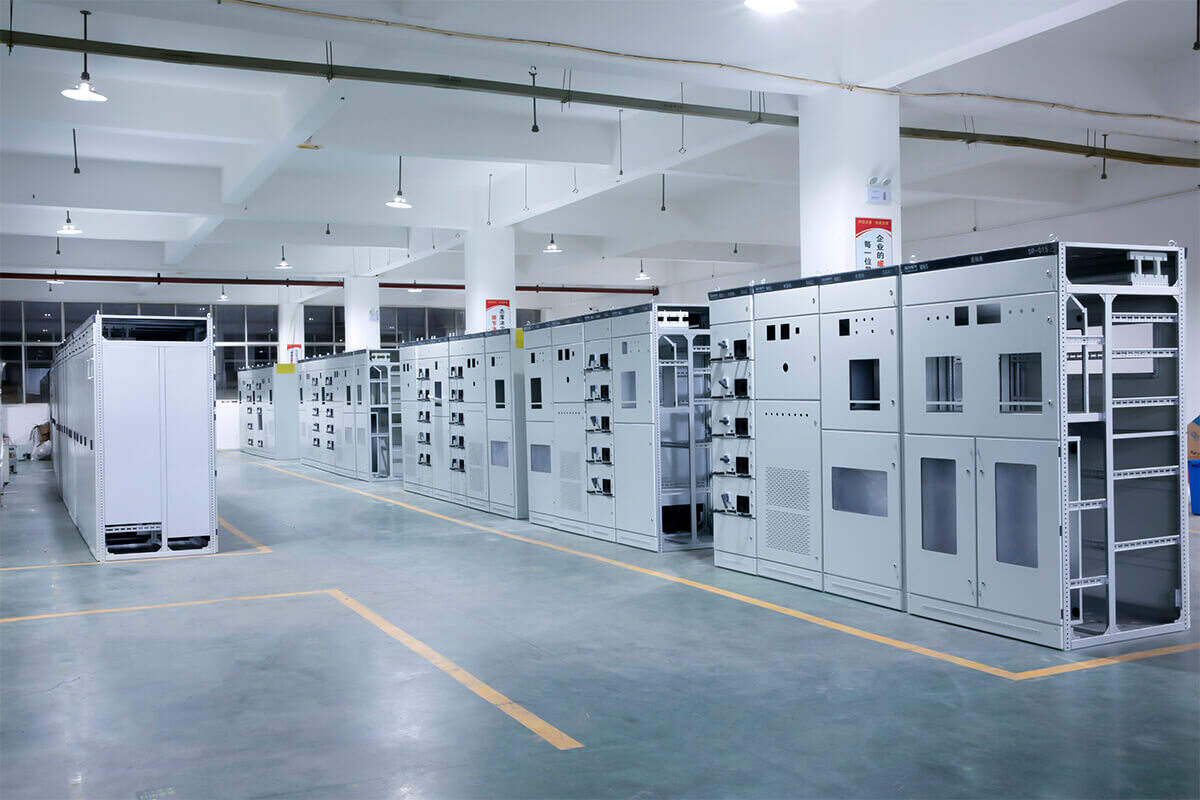
Assessing Load Capacity and Electrical Requirements
Matching Current Capacity to Application Demands
Getting the current rating right on a distribution cabinet matters a lot for both safety and how well things run. Take industrial motor control centers as an example they typically need around 400 to 600 amps just to handle those big startup surges when motors kick in, which can spike up to six times what they normally draw during regular operation. Some recent thermal tests from 2023 showed something interesting too cabinets that are within about 10% of what they actually need cut down arc flash dangers by almost half compared to ones that are too small. Most professionals agree on including at least a 25% extra capacity buffer when planning these systems. This gives room for growth down the road and has become standard practice across the industry for good reason.
Evaluating Peak and Continuous Load Profiles
Differentiating between transient peak loads and sustained continuous loads is crucial for reliable system design:
| Load Type | Duration | Design Impact |
|---|---|---|
| Peak Demand | <30 seconds | Dictates circuit breaker interrupting capacity |
| Continuous Load | >3 hours | Determines conductor ampacity and cooling needs |
A review of 214 industrial sites found that 68% of cabinet failures stemmed from inadequate peak-load planning. To address this, modern monitoring systems use 90th percentile load calculations, balancing safety margins with economic efficiency.
Sizing Busbars and Conductors by Voltage and Current Ratings
In 480VAC systems, copper busbars running at around 100A per square centimeter stay efficient enough while keeping voltage drops below that critical 2% threshold. Take a 600A feeder as an example case study it needs roughly an 80 by 10mm cross section just to manage temperature increases within safe limits (under 55 degrees Celsius) when operating at maximum capacity. The latest IEC 61439-2 standard actually demands manufacturers apply a 125% derating factor to all components inside closed enclosures during constant operation periods. This requirement isn't arbitrary it's there to make sure equipment lasts through years of service without unexpected failures down the road.
Case Study: Consequences of Overloaded Cabinets in Industrial Environments
A food processing facility installed 400A-rated electrical cabinets on their 575A refrigeration system back in 2019. Less than a year and a half later, the entire setup failed spectacularly when the busbars gave way. Looking into what went wrong showed something alarming - those connection points had been running at 148 degrees Celsius, way over the safe operating range by almost three quarters. The mess cost them around seven hundred forty thousand dollars in lost production time and repairs according to industry reports from Ponemon Institute last year. This kind of situation really underscores why manufacturers should double check their load calculations before finalizing equipment specs. Getting this right from the start could save companies massive headaches down the road.
Ensuring Effective Thermal Management and Cooling
Thermal management is fundamental to the reliability of high-power distribution cabinets, as excessive heat directly degrades insulation, reduces conductivity, and shortens component life. In fact, 38% of unplanned industrial outages are linked to poor thermal performance, according to 2023 electrical safety audits.
Understanding Heat Generation and Its Impact on Cabinet Performance
When temperatures climb just 10 degrees Celsius beyond what's considered normal operation, circuit breakers and those important busbar connections become twice as likely to fail according to basic thermal management principles learned in engineering school. The math gets pretty intense when dealing with high current systems. These setups can actually produce around 1200 watts per square meter of heat because of all that resistance and magnetic stuff happening inside. That means engineers need to find materials that conduct heat better than 200 watts per meter Kelvin at those crucial connection points where everything tends to get hot. Otherwise, we're looking at serious reliability issues down the road.
Active vs. Passive Cooling Systems for High-Power Enclosures
| Cooling Method | Energy Efficiency | Maintenance Needs | Ideal Current Range |
|---|---|---|---|
| Passive | 98% | Annual inspection | 800A |
| Active | 82% | Quarterly servicing | 800A-3,200A |
Passive solutions such as ventilated enclosures and thermally conductive interface materials are effective for stable loads in ambient temperatures below 40°C. Active systems, including forced-air or liquid cooling, offer four times greater heat transfer but introduce moving parts that require maintenance and power redundancy.
Integrating Temperature Monitoring and Ventilation Strategies
The latest cabinet models come equipped with infrared sensors paired up with smart analytics that kick on ventilation flaps once temps hit around 85% of what's considered safe. We've seen great results from positioning intake and exhaust ports just right so they can manage at least 2.5 complete air exchanges every hour. This setup cuts down hotspots by roughly two thirds compared to those old school cabinets without proper ventilation. When picking out cooling systems, it makes sense to go for ones that handle today's workload plus leave room for growth of about 25%. Most facilities find this approach keeps their equipment running smoothly even as demands increase over time.
Meeting Safety Standards and Regulatory Compliance
Core Safety Design Principles and Industry Standards Overview
High-power cabinets must adhere to core safety principles, including arc flash resistance (minimum 30 cal/cm²), reinforced insulation (≥1000 VAC), and fault current control. Compliance with IEC 61439 ensures mechanical integrity and acceptable temperature rise, while non-compliant cabinets are implicated in 29% of industrial electrical incidents (NFPA 2023).
Achieving UL 508A and Other Critical Certifications
UL 508A certification remains the benchmark for industrial control panels, requiring coordinated component testing and short-circuit withstand ratings up to 65 kA. Certified systems experience 62% fewer thermal failures than non-certified counterparts (ElectroTech Review 2023). Key design benchmarks include a minimum 25 mm phase-to-phase busbar spacing and NEC 409-compliant door interlocks.
Balancing Cost Considerations with Compliance Requirements
Although safety-certified cabinets carry an 18-35% higher initial cost, they significantly reduce long-term liabilities. OSHA penalties for non-compliance averaged $86k per violation in 2024. Using cost-effective yet compliant materials such as galvanized steel (≥2 mm thickness) with IP54 seals allows engineers to meet regulatory standards without overengineering, preserving capital for scalability.
Selecting Key Components: Circuit Breakers, Busbars, and Integration
Choosing Circuit Breakers for Reliable Overcurrent and Fault Protection
When it comes to high power applications, vacuum circuit breakers stand out as excellent choices since they can cut off currents reaching up to 40 kiloamperes within just 5 milliseconds when faults occur according to recent switchgear component studies from 2024. For proper operation in industrial environments where harmonics often cause problems, these devices need ratings at least 125% above what the system typically draws continuously. Anyone looking into this equipment needs to pay attention to several factors though. First, make sure the breaker has sufficient interrupting capacity for expected loads. Also important are those arc flash prevention features that keep maintenance personnel safe. And don't forget how well the device works together with protective gear both before and after it in the electrical distribution chain.
Optimizing Busbar Material and Configuration for Efficiency
Silver-plated copper busbars reduce contact resistance by 25% compared to bare aluminum and sustain 98% conductivity under 4,000A continuous loads (Electrical Component Efficiency Report, 2023). In high-density installations:
- Use double-bus configurations with sectionalizers for redundant power paths
- Match conductor cross-sections to IEC 61439-2 thermal derating curves
- Stagger joint spacing to minimize electromagnetic interference
Ensuring Component Compatibility and System Reliability
When installing automatic transfer switches (ATS) alongside surge protection gear, following UL 891 grounding specs becomes essential for proper operation. Some recent field research indicates that electrical systems which implement consistent communication protocols between circuit breakers, various sensors, and monitoring equipment tend to have around 30-35% fewer problems during normal operations. For safety reasons, technicians need to check all connections against ANSI C37.20.1 clearance guidelines. This helps avoid dangerous arc faults especially when working with equipment installed closely together in industrial control panels where space is limited.
Evaluating Environmental Durability and Future Scalability
Long-term performance of high-power distribution cabinets depends on environmental resilience and adaptability to evolving loads.
IP and NEMA Ratings for Protection in Harsh Environments
Enclosures rated IP65 or NEMA 4 offer robust protection against dust and water jets, making them suitable for offshore platforms and desert mining operations. Testing shows IP65 cabinets achieve 99% particulate rejection in wind turbine environments (ScienceDirect 2024), confirming their effectiveness in extreme conditions.
Material Selection for Corrosive or Humid Operating Conditions
In corrosive environments, 316L stainless steel and powder-coated aluminum alloys are preferred due to their chloride resistance. Lifecycle assessments indicate properly specified enclosures reduce maintenance costs by 40% in coastal power plants by preventing rust-related failures.
Designing for Space Efficiency and Future Load Expansion
Modular cabinets with 20-30% spare conduit space support seamless upgrades. Vertically stackable busbar systems enable 50% faster capacity expansion than traditional layouts, minimizing operational disruption. Engineers who prioritize durability and scalability from the outset typically reduce total ownership costs by 18-22% over a 10-year period while maintaining compliance with evolving power demands.
FAQ
Why is it important to match the current capacity to application demands in distribution cabinets?
Properly matching current capacity ensures safety and operational efficiency. By accommodating startup surges and preventing overloading, it reduces risks like arc flash and equipment failures.
What are the key considerations for evaluating peak and continuous load profiles?
Identifying transient peak versus continuous loads helps design reliable systems. Peak loads influence circuit breaker capacity, while continuous loads determine conductor size and cooling needs.
How do active and passive cooling systems differ in high-power enclosures?
Passive cooling systems offer high energy efficiency with minimal maintenance but are limited to stable loads. Active cooling provides superior heat transfer but requires more maintenance.
What standards must high-power cabinets meet for safety compliance?
Core standards include arc flash resistance, reinforced insulation, and IEC 61439 compliance, ensuring mechanical integrity and temperature control.
How do silver-plated copper busbars improve electrical component efficiency?
They reduce contact resistance and maintain high conductivity even under heavy load conditions. This configuration minimizes electromagnetic interference and supports system reliability.
Table of Contents
- Assessing Load Capacity and Electrical Requirements
- Ensuring Effective Thermal Management and Cooling
- Meeting Safety Standards and Regulatory Compliance
- Selecting Key Components: Circuit Breakers, Busbars, and Integration
- Evaluating Environmental Durability and Future Scalability
-
FAQ
- Why is it important to match the current capacity to application demands in distribution cabinets?
- What are the key considerations for evaluating peak and continuous load profiles?
- How do active and passive cooling systems differ in high-power enclosures?
- What standards must high-power cabinets meet for safety compliance?
- How do silver-plated copper busbars improve electrical component efficiency?